
The kemha fragment at the heart of Gallery 3 and the six-century story of Bursa's silk tradition.
In the middle of Gallery 3 'Thread and Pattern', in a dimly lit case because it is light-sensitive, is a small piece of cloth: a fragment of a 17th-century Bursa kemha kaftan. This fragment is like a summary of the six-century story of a city and a craft.
How did silk come to Bursa?
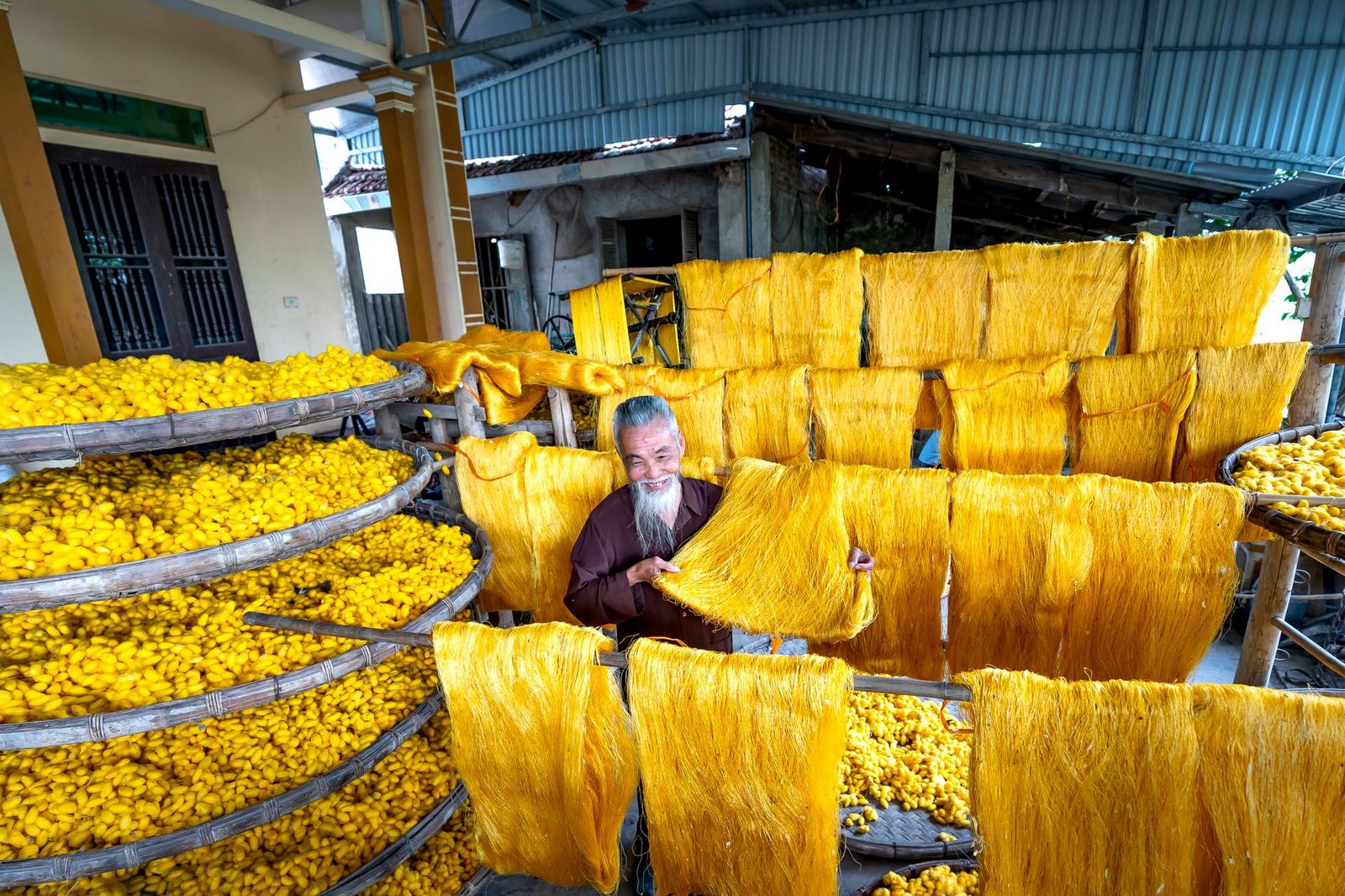
Silkworm rearing in Anatolia developed around Bursa from the 14th century. Because the city lay on the trade route for raw silk from the Far East, both local cocoon and imported silk were processed. Ottoman rule taxed the silk trade, regulated the guilds and established a large trading centre around the Koza Han.
What is kemha?
Kemha is one of the most valuable Ottoman fabrics, woven on a silk ground with gold or silver metal threads. It demanded great labour: records show two weavers working for days for a single arshin of cloth. Patterns are mostly plant motifs such as tulips, carnations, pomegranates and cypresses. These motifs are not only decoration but part of the symbolic language of the period.
What makes the fragment special?
The weft structure on the back of the museum's fragment shows the silver thread was truly woven; if it were an embroidered thread, the back would look different. The stitch marks on the edge of the fragment suggest it was taken from the sleeve of a kaftan. Because of light sensitivity, the fragment is displayed for only six months a year; the other six months it rests in a special store.
Silk today
Silk weaving continues in small workshops in Bursa. In our museum workshop we host masters of this tradition twice a year and let visitors try hand-loom weaving. At the end of Gallery 3, a 'scent station' shows the stages of processing a silk cocoon through tactile samples.
Visitor suggestion
Spend 20 minutes in Gallery 3: first look closely at the kemha fragment, then follow the stages from cocoons to thread on the wall, and finally try the tactile samples beside the shawl. Our 'Bursa Silk' themed tour lasts 75 minutes at weekends and tells this story with an expert guide.
From raw silk to garment: the production chain
- Cocoon rearing: The silkworm spins a cocoon by eating mulberry leaves for about 30 days.
- Reeling: The cocoon is unwound in hot water; a single cocoon yields about 1,000 metres of continuous thread.
- Twisting and dyeing: The thread is twisted and dyed with natural dyes (madder, indigo, kermes).
- Weaving: The warp is stretched on the loom and the weft is thrown with silk or metal thread.
- Tailoring: The cloth is cut and becomes a kaftan or shawl.
In the museum's blog archive you will also find articles on the other works in Gallery 3 and on weaving techniques. For research requests about our textile collection, you can book an appointment with our library.
Related Posts
How Is a Ceramic Restored? Notes from the Conservation Laboratory
A broken plate's journey from documentation to the final retouch, and the principle of reversibility in restoration.
Read More